 Image 1 of 1
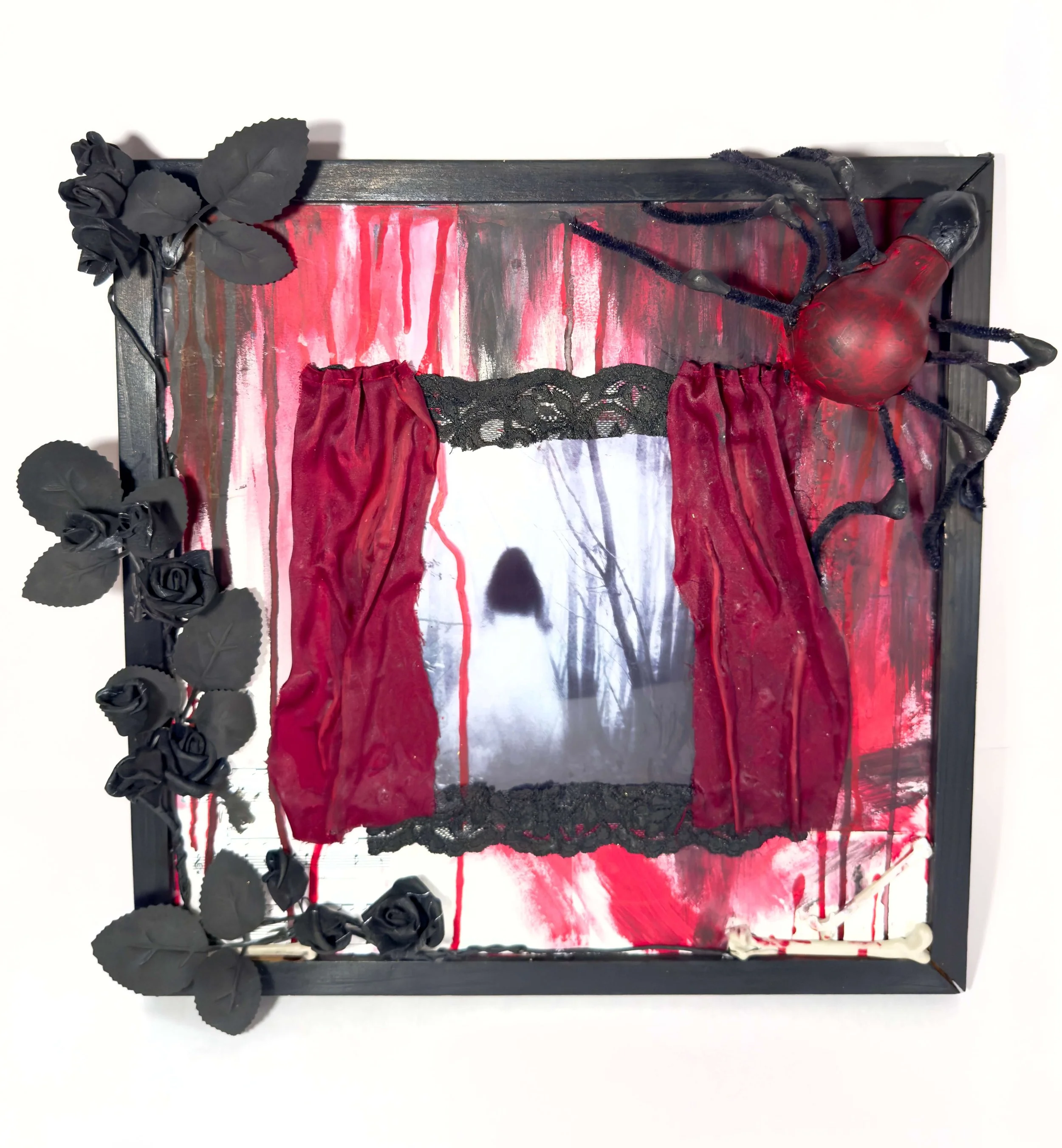
Mixed media (the spider also lights up), 16”x16”
This piece presents a staged interior that feels simultaneously theatrical and unsettling. A shadowy figure stands just beyond a framed opening, partially obscured by crimson fabric curtains that suggest both concealment and invitation. The scene reads like a paused moment—something has been revealed, but not fully understood.
The surface is richly layered with tactile materials: fabric, lace, sculptural elements, and painted drips that evoke decay, tension, and emotional residue. Black roses climb the frame like creeping thoughts, while a spider form anchors the upper corner, acting as a silent observer and symbol of entrapment, patience, and psychological webs.
The work blurs boundaries between painting, object, and altar. The frame becomes part of the narrative rather than a boundary, reinforcing themes of voyeurism, repression, and what we choose to hide versus what watches us from the dark. The figure beyond the curtain remains anonymous, allowing viewers to project their own fears, memories, or suppressed emotions into the space.
This piece explores the idea that safety and danger often share the same threshold—and that what frightens us most is rarely fully visible.
Mixed media (the spider also lights up), 16”x16”
This piece presents a staged interior that feels simultaneously theatrical and unsettling. A shadowy figure stands just beyond a framed opening, partially obscured by crimson fabric curtains that suggest both concealment and invitation. The scene reads like a paused moment—something has been revealed, but not fully understood.
The surface is richly layered with tactile materials: fabric, lace, sculptural elements, and painted drips that evoke decay, tension, and emotional residue. Black roses climb the frame like creeping thoughts, while a spider form anchors the upper corner, acting as a silent observer and symbol of entrapment, patience, and psychological webs.
The work blurs boundaries between painting, object, and altar. The frame becomes part of the narrative rather than a boundary, reinforcing themes of voyeurism, repression, and what we choose to hide versus what watches us from the dark. The figure beyond the curtain remains anonymous, allowing viewers to project their own fears, memories, or suppressed emotions into the space.
This piece explores the idea that safety and danger often share the same threshold—and that what frightens us most is rarely fully visible.